

Activists Warn US Women of Sharia Law Threat

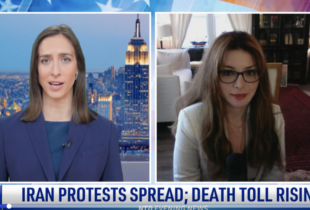
My interview with CBN News

By Paul Strand

CBN News Washington Sr. Correspondent

Friday, May 11, 2012


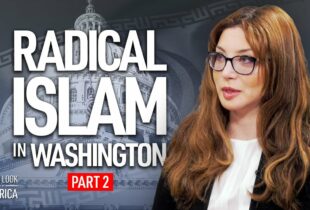
WASHINGTON — There’s growing concern thatSharia law is creeping into America, with some U.S. judges even citing Islamic law in their rulings.

Activists are now working to shine light on what they call Sharia’s war on women.

A vast coalition met in Washington, D.C., Thursday, to warn women of the threat Islamic law would pose to their rights if enacted in the U.S.

“Sharia takes an entirely different approach to their rights than would the American Constitution or the Declaration of Independence,” explained Karen Lugo, assistant director of the Center for Constitutional Jurisprudence.

The group’s national public education campaign includes women who’ve been affected by harsh Sharia law.

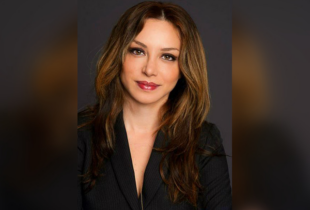
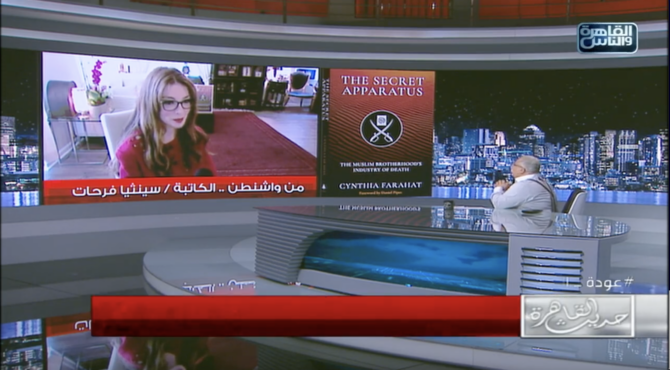
Cynthia Farahat fled Egypt to avoid facing military prison for her human rights work against Islam.

“I’m almost here in America on exile for standing up for basic human rights and basic values under Sharia law,” she said. “I lived under Sharia law all my life. I just came to America six months ago.”

From her experience, Farahat summed up Sharia’s treatment of women as “oppressive” and “violent.”

“It does not identify women as citizens. And some jurists in Sharia law do not identify women as human beings,” she explained. “Some jurists would go so far as defining them as livestock.”

Farahat is a writer and helps with efforts by the Center for Security Policy, the group behind Thursday’s panel discussion in Washington.

Participants want America’s women to understand the stifling effect Sharia law would have on their unalienable rights of life, liberty, and the pursuit of happiness.

“The women living in Sharia are often in polygamous marriages, often in marriages where they do not have freedom to pursue their education or pursue a career if that should interest them,” Lugo said.

The panelists also noted that Islam is far more than just a religion, and the Koran commands the whole world must come under Sharia law.

“They say Islam is religion and state,” Farahat said.

“It encompasses every aspect of one’s life,” Lugo added.

Some 5,000 Muslim women die in honor killings every year, which Islamic extremists declare imperative.

Sharia insists women have guardians, and some Islamic countries view them legally as perpetual minors, never as adults.

Sharia law also allows husbands to divorce their wives at any time, without reason.

‘End the Shariah War on Women’ Launch Event

iframe>Streamed live on May 10, 2012 by 

This Thursday, May 10th, at 10:00 a.m. in the Bloomberg Room of the National Press Club, the Center for Security Policy launches a national public education campaign to ask America’s leaders to end the real ‘war on women’ — the Shariah War On Women. (http://www.theshariahwaronwomen.org)

Shariah law oppresses women’s liberties and human rights, denying them their unalienable rights of life, liberty, and the pursuit of happiness:

Egypt: Radicalizing the Political Bargain Part II

Center for Security Policy| May 01, 2012
By Cynthia Farahat

As I argued in Part 1 of this investigation, the Muslim Brotherhood (MB), despite its often inflammatory rhetoric, is at heart a pragmatic and patient political organization willing to ally with any and all parties that will ultimately advance its expansionist international agenda.This is important to keep in mind as contradictory reports as to who holds the real levers of power continue to pour out of Egypt. Whoever prevails in the presidential elections will have the Islamist bloc by his side.

Not only has the MB formed a solid alliance with the Supreme Council of Armed Forces (SCAF), but last month Dostor newspaper reported that Egypt’s Ministry of Interior has crafted a deal with both the Brotherhood leaders and the Nour Salafist party to create and train an Egyptian variation of the Iranian Basij, the youth security forces who along with the Revolutionary Guard have so effectively suppressed any public dissent of the regime in Tehran. Rest assured that this new paramilitary unit will play a major role discouraging any Egyptian liberal democratic protest during the upcoming presidential election charade.

Egypt: Radicalizing the Political Bargain Part I

Center for Security Policy | Apr 17, 2012
By Cynthia Farahat

In an article for Middle East Quarterly last year, I established the historic and ongoing alliance between the current Egyptian military and the Muslim Brotherhood (MB). While the current military junta and the Mubarak regime before  them have long encouraged the United States to believe a power struggle exists between the Supreme Council of the Armed Forces(SCAF) and the Brotherhood, the real fight for control of Egypt lies elsewhere.

In July 2005, the former Supreme Guide of the Muslim Brotherhood (MB), Mahdi Akef publically gave Bay’ia (Islamic oath of loyalty) to Mubarak, and stated in an interview for Egyptian Magazine Akher Sa’a: “We support President Mubarak’s presidential candidacy, and I wish to meet with him.”  This explains why the Brotherhood initially formally declined to join in the January 25, 2011 protest against him.

Yasser El-Hodeiby a member of the MB Freedom and Justice and Party (FJP), stated in an interview with Almasry Alyoum newspaper on January 1, 2012 that the Brotherhood officially gave Bay’ia to Mubarak and his son Gamal, in 2005.

Continue reading →

Faith Under Fire: Cynthia Farahat

Center for Security Policy, Faith Under Fire Conference, Chicago March 10th,  2012.


Faith Under Fire Conference

Representative Frank Wolf endorses Faith Under Fire Conference:

[CLICK TO DOWNLOAD PDF]

Please join us for this eye-opening Chicago-area conference on the worldwide crisis in religious freedom. We will examine the plight of persecuted religious minorities in Islamic countries as representatives of these communities offer riveting testimony. Key members of the U.S. Congress will discuss the latest legislation and actions intended to prevent genocide. Recognized international and national experts will offer insightful analysis of policy issues and the global threat to religious freedom.

Presented by the Center for Security Policy

Center President Frank Gaffney previews the Conference on Chicago Moody Radio FM 90.1 WMBI:

‘Songs of the Revolution’ – Egypt 2010-2011 (Part I) By: Cynthia Farahat*

Published by MEMRI on February 23, 2012.

Introduction

The Egyptian revolution of January 25, 2011 began on the Internet long before the massive protests in Al-Tahrir square took place. The 18 days of that revolution and subsequent events sparked a wave of popular creative expression, in the form of protest songs communicating the ideas and ideals of the liberal youth that led the revolution.

This creative drive, which continues today, reflects the frustration of the youth that led the revolution and its sense that the revolution has been hijacked by an emerging coalition of the Supreme Council of the Armed Forces (SCAF) and Islamist circles – both the Muslim Brotherhood and the Salafi movements – which are presenting themselves as revolutionaries while shaping post-revolutionary Egypt in the image of its past. In an attempt to compete with the authentic creativity of the liberal youth, the Muslim Brotherhood even produced a propaganda rap video depicting itself as the true revolutionary.[1]

Similar to the online commotion prior to the January 25, 2011 revolution, the continuing creative endeavor by the liberal youth reflects an undercurrent that could indicate the coming of a possible second revolution.

The clips in this report, from the Internet, focus on the Egyptian youth’s resistance to the continuing SCAF regime; their critique of the Muslim Brotherhood, Islamic circles, and government media; and the original values and ideals that fueled the first revolution.[2]

This report is the first in a series on the cultural dimensions of the Egyptian revolution.

Following are the clips, with English translations:

‘Liars’ by Revolution Records


 Revolution Records is Egypt’s first underground rap label. It was established in 2006 by a group of young musicians from Alexandria who later participated in the Tahrir Square protests and are known for their pro-freedom songs and criticism of the SCAF.

Continue reading →

Interview with Cynthia Farahat on Growing Up in Egypt, Discovering Ayn Rand, and Fighting Islamists

Published on February 10, 2012 on The Objective Standard

Posted by Joshua Lipana at 11:36 am

Cyn_Farah_in_Congress

Cynthia Farahat is an Egyptian political activist, writer and researcher. She co-founded the Liberal Egyptian Party (2006–2008) and served as a member of its political committee. In 2008-2009, she was program coordinator and program officer at the Friedrich Naumann Foundation for Liberty in Cairo, a multi-national free market think tank. She was a founder of the Masr El-Om (Mother Egypt) Party and was a member of its political committee (2004–2006). She is a fellow at the Middle East Forum and the Center for Security Policy. She has been published in the Middle East Quarterly, and in other publications in both English and Arabic. In December 2011, Ms. Farahat testified before the Tom Lantos Human Rights Commission in the US House of Representatives on the roots of the persecution of the Coptic Christian minority in her native Egypt.

I recently had the pleasure of interviewing Ms. Farahat on Egypt, Ayn Rand, the Muslim Brotherhood, and U.S. foreign policy. —JL

Continue reading →

Column: Cynthia Farahat: A courageous woman with a profound message for U.S.

By: Matthew May
Published on The Eagle-Tribune on February 5, 2012

What does a freedom fighter look like?

Romanticized images of guerrillas coiled to spring on unsuspecting imperialists might come to mind. Students of history might think of American Rangers scaling Pont du Hoc during the D-Day invasion of France or perhaps the Minutemen from this commonwealth who helped expel the British Empire.

Seldom, if ever, would one describe a freedom fighter as a slight, bespectacled Egyptian woman in business attire. But such a warrior was in our midst last Saturday, when Cynthia Farahat rose to deliver a presentation about politics and religion in her homeland during a conference on Christianity in the Middle East in Framingham sponsored by the Committee for Accuracy in Middle East Reporting in America.

Continue reading →

Don’t Ignore Electoral Fraud in Egypt

By Daniel Pipes and Cynthia Farahat

Published on Jan 23, 2012 on National Review Online 

When Egypt’s Lower House convened on Jan. 23, Islamists held 360 out of its 498 seats, or 72 percent. This astounding figure, however, reflects less the country’s public opinion than it does a ploy by the ruling military leadership to remain in power.

In a recent article (“Egypt’s Sham Election,” Dec. 6) we argued that just as Anwar El-Sadat and Hosni Mubarak in the past “tactically empowered Islamists as a foil to gain Western support, arms, and money,” so do Mohamed Tantawi and his Supreme Council of the Armed Forces (SCAF) “still play this tired old game.”

We offered three proofs for this assertion: (1) local electoral deceits; (2) the SCAF offer of a “deal” to the Islamists; and (3) the military having subsidized Islamist political parties. Seven weeks later, various signs point to fraud on a far grander scale.

Mohammed ElBaradei, former director general of the International Atomic Agency (IAEA)

Continue reading →